
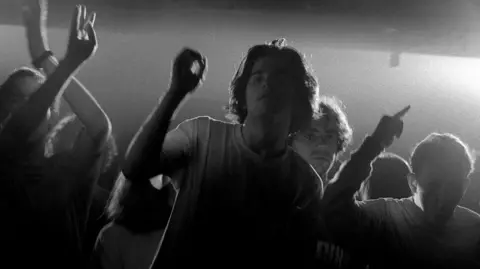
In the late 1980s and early 90s, Manchester was a city radically changed by sound.
For a brief but powerful period, music, drugs and fashion all intertwined to make the city - labeled the Madchester scene - the destination everyone wanted to be.
"It reached a stage where about a third of the office would head to Manchester every Friday night," said a ex-music press writer and radio presenter. "They'd just decamp to Manchester and you wouldn't see them again until Tuesday or Wednesday the next week, appearing rather worse for wear."
That celebrated 'second summer of love' - as it was termed - shone brightly for several years, from the Hacienda to Spike Island, before burning out... paving the way for the rise of Britpop.
Now, 35 years on, Manchester seems to be enjoying a renewed moment, in musical terms, as a host of creatives, audiences and execs once again make the journey up north.
A Convergence of Major Events
The previous month, the city played host to the prestigious BRITs - moving the ceremony from London for the very first time in its close to five-decade run.
Come Thursday, the new Co-op Live arena - which has already secured a booking for the Brits again for next year - will also stage the MOBO Awards for the first occasion.
Starting Wednesday and concluding Saturday, the BBC Radio 6 Music Festival comes back to its now established 0161 residence.
Are we seeing Manchester regaining its status as the UK's musical hotspot?
'Change in Dynamics'
The city-region's Mayor thinks so.
He states that "ultimately, we are witnessing a movement of influence, with momentum shifting into Manchester".
He notes: "This goes beyond those large-scale awards coming, an increasing number of up-and-coming creatives is deciding to establish Greater Manchester their headquarters."
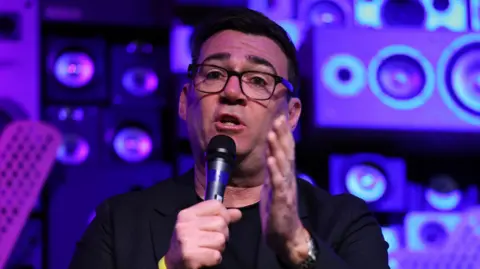
He credits the music industry body which runs the Brits for having put on a number of local supporting activities in the city.
"The BRITs provided more than just a glamorous night," he says. "They built bridges into local areas."
The leading trio of music labels are all still headquartered in London. The mayor comments he would "love a big label to have a big presence here in the city".
His proposal last week of the introduction of night buses from the city centre is, according to a Music Venue Trust representative, "the best thing" for concert-goers and clubs both.
'Magic Formula'
Although some parts of Manchester are still among the most deprived areas, it is considered to have one of the most rapidly expanding city-region economies in the country.
A chief commercial officer who moved up from London five years ago, formerly of a major London arena, said bringing the Brits to Manchester was "the primary goal" when opening the biggest new indoor arena in Europe.
"It's given it, definitely, a new lease of life, being up here," she said of the event, which allegedly drew a record global audience.
Whilst big events can be "lost" in a massive metropolis like London, she says, the "unique charm" that Manchester brings - including public art installations and celebrity-led transit messages - "really came out".
The "off-the-scale impact" of having the Brits "embraced by" Manchester was also emphasized.
The "excellent infrastructure", combined with its "famous innovative spirit" and rich musical history made the move north feel like "an obvious progression".
'Sustainable Growth'
This isn't the Mobos' first rodeo outside of London. Over the past decade, it has made its way up north to the likes of Leeds, Liverpool and Newcastle.
Manchester-born MC Aitch is up for best hip-hop artist at this year's ceremony in his hometown, where he will also take to the stage.
Aitch was found as a youngster by a Manchester-based businessman, while spitting bars at a local open mic night.

He decided early on to ignore the temptations of London and to run his music business from Manchester, a place which he said "holds a distinct character" that "no other city can replicate".
"The most important thing is that sustainable growth," he said.
He believes the current excitement around the city has been "evidence" to the decision he made to stay, a decade ago.
'Cross-Generational'
Yet, there are still hurdles to overcome, as a Mancunian singer highlights.
The musician on the lineup thinks it's great that Manchester is "being highlighted". But, she asks: "What number of artists from the north are actually getting nominated?"
Only one of this year's nominated artists at the BRITs actually hailed from Greater Manchester.
And beyond Aitch, there are only a few of northerners in contention for a MOBO this year too.
The artist thinks there is still a "gap" between the investment in local music scenes in the north and south.
"She also cautions about the 'risk' of 'merely transplanting something out of London and just dropping it into Manchester and assuming it's going to work' when 'the environments are vastly dissimilar'."
If the music world is decamping from London again this week, then it needs to "give back to the community", she adds, and not just pay it "empty words".

The singer will perform at a notable Manchester venue for the event's introducing evening. She has recently performed with Manchester stalwarts and underlines the "genuinely spanning ages" and "united" make-up of the city.
"I definitely feel part of new wave of Manchester, but that's been taken under the wing of the old guard, for sure."
Events like last month's grassroots event were "amazing", she adds, at "seeking to embed within the community fabric of the city".
The location puts on gigs but also runs training schemes, training people for careers in jobs like sound engineering.
A founding director acknowledges it's great for Manchester to be getting these prestigious worldwide awards, but at the same time he says: "I'm not sure that that so-called resurgence ever went away from Manchester".
"A steady progression has been happening of entrepreneurial behavior in this city for 50 years."


